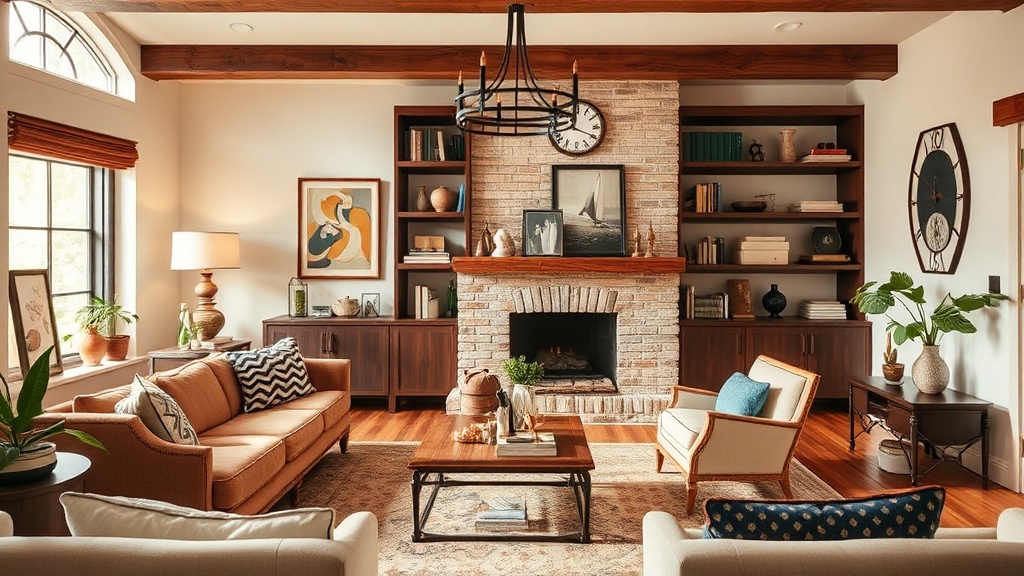
Crafting a Harmonious Home: Blending Individual Styles in Shared Living Spaces

How Can Couples Combine Different Decorating Tastes?
Creating a home that feels uniquely ‘yours’ as a couple can be a delightful, yet sometimes daunting, endeavor. This guide walks you through practical strategies to merge distinct personal styles into a cohesive, comfortable, and truly shared living environment. You’ll learn how to identify your individual aesthetic preferences, find common ground, and implement design choices that celebrate both your personalities, transforming your house into a harmonious home that reflects your partnership.
The first step in any successful design collaboration is understanding each partner's starting point. Take some time, independently at first, to pinpoint what truly resonates with you. What colors make you feel calm or energized? Which textures do you gravitate towards—soft velvets, rustic wood, sleek metal, or natural fibers? Flip through magazines, browse Pinterest, or even recall favorite places you’ve visited. Look for patterns in the furniture styles, art, and overall ambiance that catch your eye. Are you drawn to minimalist Scandinavian design, cozy farmhouse charm, bohemian eclecticism, or perhaps classic traditionalism? Being able to articulate your preferences, even if broadly, provides a foundation for discussion.
Once you both have a clearer sense of your individual visions, it's time to converge. This isn't about one person winning out; it's about thoughtful integration. Start by looking for overlaps. Perhaps one partner loves bold colors, and the other prefers neutrals—can you agree on a neutral base with vibrant accent pieces? If one likes modern lines and the other vintage finds, consider an eclectic style that artfully mixes periods. Often, you'll discover shared values—a desire for comfort, functionality, or a space that feels inviting to guests. These shared values become your guiding principles. A powerful tool here is creating a shared mood board, either physical or digital. Pin images, fabric swatches, and color palettes that you both find appealing. This visual dialogue can illuminate surprising commonalities and inspire new directions neither of you might have considered alone.
What Strategies Help Design a Cohesive Shared Home?
Achieving a cohesive look when two distinct styles meet often begins with establishing a neutral foundation. Think of your walls, larger furniture pieces like sofas, and primary flooring as your canvas. Opt for understated colors and timeless designs in these areas. This approach provides a calm backdrop against which individual styles can truly shine without clashing. For instance, a cream-colored sofa can effortlessly accommodate throw pillows that speak to one partner's love for geometric patterns and another's preference for plush, solid textures.
Next, strategically incorporate personal items and smaller decorative accents. This is where you infuse personality. Instead of scattering everything everywhere, consider designated 'zones' for individual expression. Perhaps one wall in the office becomes a gallery for one partner's travel photography, while a bookshelf in the living room holds the other's collection of antique ceramics. The key is balance and intentionality. Curate pieces that genuinely represent each of you, making sure they feel integrated rather than randomly placed. Using unified frames for art, or selecting accessories within a complementary color scheme, can help disparate items feel part of a larger whole.
Color palettes are another critical element in creating harmony. Instead of trying to force two entirely different palettes together, aim for a dominant scheme with accent colors. You might choose three main colors—two neutrals and one vibrant hue—and use them consistently throughout the main living areas. This doesn't mean every room has to be identical, but a visual thread helps tie the spaces together. If one partner adores cool tones and the other warm, perhaps explore a sophisticated gray that leans slightly warm, or a deep teal that marries both. Experiment with different shades and tints of your chosen colors to add depth without introducing chaos. For deeper insights into how colors interact, consider resources like